
 |
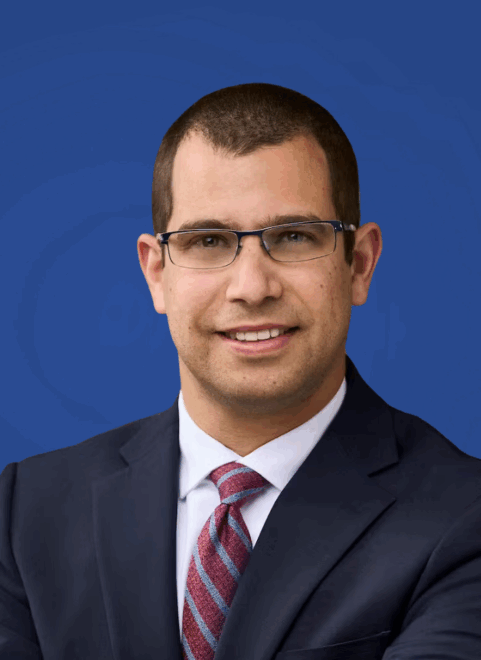
Published July 7, 2026, Updated November 2, 2026 Author: Jordan Fensterman, Esq. Executive Partner and Director of of the OPMC & OPD Defense Practice at Abrams Fensterman, LLP. 516-368-9430 |
OPMC Specialties: Defense Guides for New York Physicians by Medical Specialty
How Does OPMC Evaluate a Complaint Tied to a Physician’s Specialty?
OPMC evaluates a specialty complaint by measuring the physician’s conduct against the misconduct definitions in New York Education Law Section 6530, such as gross negligence on a particular occasion or failing to keep an accurate patient record. An adverse outcome alone does not establish misconduct. Abrams Fensterman’s attorneys explain how these standards apply in each specialty.
Why Specialty Facts Shape an OPMC Defense
Every physician licensed in New York answers to the same professional misconduct definitions, but the facts OPMC examines depend on the work the physician actually does. A radiologist’s case can turn on a reading and how a finding was communicated, while an anesthesiologist’s case can turn on the monitoring record. Each guide below applies New York law to one specialty fact pattern. For the complaint, interview, and hearing process that applies in every case, see our OPMC Defense Overview.
OPMC Specialty Defense Guides
Anesthesiology: Failure to Monitor
An anesthesia failure to monitor allegation asks whether a patient’s oxygenation, ventilation, circulation, and temperature were continually evaluated during anesthesia, the core requirement of the American Society of Anesthesiologists’ Standards for Basic Anesthetic Monitoring. Because the anesthesia record can be compared against that standard after a death or serious injury, anesthesiologists can learn how these cases are investigated and defended in our guide to anesthesia failure to monitor OPMC cases.
Cardiology and Cardiac Surgery: PT/INR Monitoring Failures
A PT/INR monitoring failure involves missed, delayed, or undocumented anticoagulation checks and dose adjustments for a patient on warfarin, such as a patient recovering from mechanical heart valve replacement. Failing to keep a record that accurately reflects evaluation and treatment is its own misconduct category under New York Education Law Section 6530.
Gastroenterology: Colon and Intestinal Perforations
Colon and intestinal perforation is a recognized complication of colonoscopy, and the American Society for Gastrointestinal Endoscopy quality targets set an acceptable perforation rate rather than a rate of zero.
Nephrology: PT/INR Monitoring in Kidney Disease
Patients with chronic kidney disease or on dialysis who take warfarin tend to have less stable INR values and a higher risk of bleeding, which puts weight on how often a nephrologist checks PT/INR, adjusts doses, and coordinates care with the patient’s cardiologist or anticoagulation clinic.
Otolaryngology (ENT): Vocal Cord Injuries
Vocal cord paralysis is a recognized risk of thyroid, parathyroid, and laryngeal surgery because the recurrent laryngeal nerve runs through the operative field, and the American Academy of Otolaryngology–Head and Neck Surgery Foundation has issued a clinical practice guideline on assessing voice before and after thyroid surgery. OPMC’s review focuses on the informed consent discussion, surgical technique, and how quickly the injury was recognized and treated.
Pain Management: Oxycodone and Opioid Prescribing
New York Public Health Law Section 3331 limits a practitioner to a seven-day supply of a Schedule II, III, or IV opioid on the initial treatment of acute pain, and a finding by the Commissioner of Health that a physician violated Article 33 of the Public Health Law is itself professional misconduct under Education Law Section 6530.
Pediatrics: Injuries and Missed Diagnoses
A pediatric OPMC complaint usually follows an injury to a child or a diagnosis that was missed or delayed, such as appendicitis, meningitis, or sepsis, conditions whose early signs in young patients can be nonspecific.
Radiology: Missed Cancer Diagnosis
A missed or delayed cancer diagnosis on imaging raises the question of whether a radiologist’s reading reflected negligence, gross negligence, or incompetence under Education Law Section 6530, or a discrepancy that appears obvious only in hindsight.
Urology: Testosterone Prescribing
Testosterone is a Schedule III controlled substance, so a urologist’s prescriptions fall under New York Public Health Law Article 33, including the requirement to consult the I-STOP Prescription Monitoring Program before prescribing. OPMC inquiries in this area often ask whether hypogonadism was confirmed by laboratory testing before treatment began and whether the patient was monitored once it did.
Related Proceedings That Can Run Alongside an OPMC Case
A complaint arising from patient care can also lead to a civil malpractice claim, and Abrams Fensterman’s Medical Malpractice Defense Division collaborates with the OPMC defense team on matters involving both. When the same conduct is the subject of a criminal investigation, our criminal defense and OPMC attorneys work as one coordinated team.
Speak With an OPMC Defense Attorney
If you received a letter, records request, or call from OPMC about care in your specialty, speak with experienced counsel before responding. Contact Executive Partner Jordan Fensterman, Director of the OPMC and OPD Defense Practice, at (516) 368-9430.
Call Jordan Fensterman:
(516) 368-9430
Frequently Asked Questions About OPMC Defense for Medical Specialists
Can physicians in every medical specialty be investigated by OPMC?
Yes. The New York Office of Professional Medical Conduct investigates physicians across every medical specialty, including primary care, surgery, psychiatry, emergency medicine, anesthesiology, dermatology, cardiology, orthopedics, OB/GYN, pain management, and many others. While the allegations often differ by specialty, every physician licensed in New York is subject to OPMC jurisdiction.
Do different medical specialties face different types of OPMC investigations?
Yes. OPMC investigations frequently reflect the physician’s specialty. Psychiatrists often face prescribing and professional boundary allegations, surgeons may face operative judgment and informed consent issues, while emergency physicians commonly encounter investigations involving documentation, triage decisions, and high-risk patient care.
Can documentation alone trigger an OPMC investigation?
Yes. Documentation deficiencies are among the most common allegations investigated by OPMC. Incomplete, inaccurate, delayed, or inadequate medical records may form the basis of an investigation or strengthen other allegations involving patient care, prescribing, or professional misconduct.
Should physicians hire an attorney before responding to OPMC?
Yes. Physicians should consult experienced OPMC defense counsel immediately after receiving a letter, subpoena, records request, or inquiry from OPMC. Early legal representation helps protect your rights, preserve important defenses, and avoid responses that may complicate the investigation.
Which medical specialties does Abrams Fensterman represent in OPMC defense matters?
Abrams Fensterman represents physicians across virtually every area of medicine, including emergency medicine, psychiatry, surgery, orthopedic surgery, pain management, OB/GYN, dermatology, plastic surgery, internal medicine, cardiology, neurology, anesthesiology, radiology, gastroenterology, ophthalmology, pediatrics, oncology, endocrinology, pulmonology, nephrology, pathology, occupational medicine, Workers’ Compensation physicians, and many other healthcare professionals throughout New York.