
 |
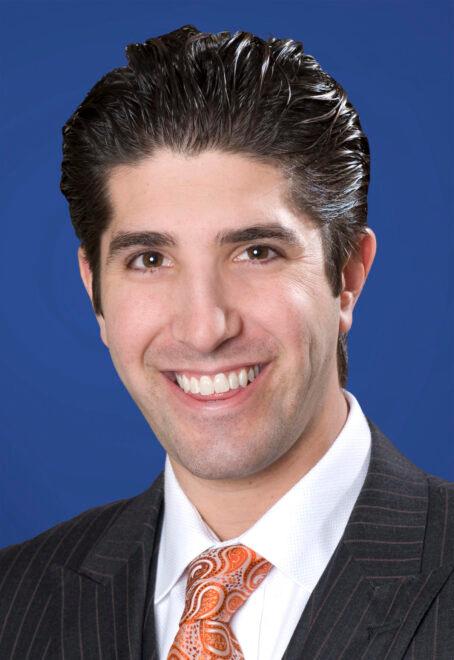
Published November 2, 2026 Author: Jordan Fensterman, Esq. Executive Partner and Director of of the OPMC & OPD Defense Practice at Abrams Fensterman, LLP. 516-368-9430 |
Anesthesia Failure to Monitor
What Counts as “Failure to Monitor” in an Anesthesia OPMC Case?
In a New York Office of Professional Medical Conduct (OPMC) investigation, an anesthesia “failure to monitor” allegation may focus on whether an anesthesiologist appropriately monitored, responded to, and documented a patient’s oxygenation, ventilation, and circulation, including pulse oximetry and capnography readings. Investigators may compare the anesthesia record against accepted professional standards and expert medical opinion. Abrams Fensterman’s attorneys represent anesthesiologists and other New York physicians in OPMC investigations.
Monitoring gaps become an issue when pulse oximetry, capnography, or a qualified anesthesia provider’s continuous presence is missing, disconnected, or unrecorded during a period when the patient was sedated or under general anesthesia. When a patient dies or is seriously injured during or shortly after a procedure, investigators compare what the chart shows against the accepted monitoring standards to decide whether the gap amounts to negligence, gross negligence, or incompetence under state law.
Why Anesthesia Monitoring Failures Become OPMC Cases
When something goes wrong during a procedure involving sedation or general anesthesia, and especially when a patient dies, regulators and risk managers turn to the anesthesia record. The equipment and standards for watching a sedated patient are well established, well documented, and easy to check against the medical chart after the fact.
An anesthesia record shows whether the required monitoring took place, including oxygen saturation, blood pressure, and heart rate at least every five minutes, carbon dioxide readings when a breathing tube or airway device is in place, and the presence of a qualified anesthesia professional in the room.
Gaps in that record, missing entries, long stretches without a reading, and an alarm that appears to have been silenced are objective, chart-based evidence, which sets anesthesia cases apart from OPMC matters where the dispute turns on a judgment call. This does not mean anesthesia cases are simple. It means a documentation question sits near the front of the investigation, and the physician’s answer to that question shapes what follows.
For a New York physician, that is why early, experienced legal representation matters. A gap in the record can have an innocent explanation: equipment malfunction, an emergency that pulled attention elsewhere for a clinically appropriate reason, or a charting error that does not reflect what actually happened at the bedside. Whether that explanation is credited can depend on how, and how early, it is presented to OPMC’s investigators.
The National Monitoring Standard OPMC Measures Against
New York sets its own anesthesia monitoring rules for hospitals in 10 NYCRR 405.13, and OPMC and its expert reviewers may also look to the nationally recognized Standards for Basic Anesthetic Monitoring published by the American Society of Anesthesiologists, most recently amended October 15, 2025. The ASA standard sets two basic requirements for every general anesthetic, regional anesthetic, and monitored anesthesia care case.
The first requirement is that a qualified anesthesia provider must be present in the room for the entire procedure, monitoring the patient continuously, with limited exceptions for a direct known hazard such as radiation or a temporary absence during an emergency. The second requirement is that the patient’s oxygenation, ventilation, circulation, and body temperature must be continually evaluated throughout the anesthetic.
For general anesthesia, regional anesthesia, and monitored anesthesia care, the ASA monitoring standard calls for a quantitative measure of blood oxygen such as pulse oximetry, an electrocardiogram displayed continuously, and blood pressure and heart rate checked at least every five minutes. When a breathing tube or supraglottic airway is in place, exhaled carbon dioxide must be measured continually with a quantitative method such as capnography, and during moderate or deep sedation every effort should be made to monitor for exhaled carbon dioxide. When a mechanical ventilator controls breathing, a device that sounds an alarm if the breathing system disconnects must be in use. Several of these requirements can be waived under extenuating circumstances, and the ASA recommends noting the reason in the patient’s medical record.
When a death or serious complication occurs, or when any complaint is made, OPMC’s clinical reviewers compare the anesthesia record against this standard. A record that documents monitoring consistent with the standard can support the physician. A record with unexplained gaps, especially gaps that line up in time with a deteriorating patient, is the kind of finding that can open or drive an investigation.
How a Monitoring Gap Becomes a Misconduct Charge
New York Education Law section 6530 defines the professional misconduct categories that apply once OPMC concludes something went wrong. A monitoring failure is usually charged under one or more of four categories. Negligence on more than one occasion is a repeated failure to exercise the care a reasonably prudent physician would exercise under similar circumstances. Gross negligence on a particular occasion is negligence that is egregious when weighed against an average physician’s practice, and it can rest on a single occasion. Incompetence on more than one occasion is a repeated lack of the basic knowledge or skill needed to practice. Gross incompetence is an extreme lack of that knowledge or skill, and the statute attaches no occasion requirement to it.
Because negligence and incompetence require more than one occasion, a single, isolated monitoring lapse cannot support either charge on its own. A single lapse can still lead to a gross negligence charge if it is serious enough. A pattern of lapses, or a lapse combined with clear evidence that the physician recognized and ignored warning signs, raises the risk of a gross negligence or gross incompetence charge, which carries more serious exposure.
Separately, failing to maintain a record that accurately reflects the evaluation and treatment of the patient is its own basis for a misconduct charge under section 6530, subdivision 32. This means an anesthesiologist can face a documentation charge even when the clinical care itself was reasonable, if the chart does not accurately reflect what monitoring was performed.
For procedures performed in an office-based surgery setting, rather than a hospital or licensed ambulatory surgery center, New York Public Health Law section 230-d adds a separate legal obligation. The law defines an adverse event to include a patient’s death within thirty days of the procedure, and it requires the physician to report adverse events to the Department of Health’s patient safety center within three business days of the occurrence of the event.
A violation of section 230-d is itself professional misconduct under Education Law section 6530, subdivision 48. Procedures performed in a hospital fall under a different reporting system, the New York Patient Occurrence Reporting and Tracking System (NYPORTS), which places its reporting obligations on the hospital. Either reporting pathway can generate the initial complaint that brings a case to OPMC’s attention, independent of any complaint from the patient’s family.
How OPMC Investigates a Death Tied to Anesthesia Monitoring
An OPMC investigation into an anesthesia-related death can begin with a mandatory adverse event report from a hospital or office-based surgery practice, a complaint from the patient’s family, or a referral tied to a civil malpractice claim. Investigators review the medical record, including the anesthesia monitoring strips and any equipment or alarm logs, allow the physician to explain the care in an interview, and may have a physician reviewer in anesthesiology assess whether the monitoring met the accepted standard.
If the matter proceeds to formal charges, it is heard by a hearing committee of the State Board for Professional Medical Conduct made up of two physicians and one lay member. An administrative officer rules on motions and drafts the committee’s conclusions but does not vote. The committee’s conclusion must rest on a preponderance of the evidence, meaning it is more likely than not that misconduct occurred. That is a lower burden of proof than the beyond reasonable doubt standard in a criminal case, which is one reason a well-prepared factual and expert defense matters from the earliest stage of the investigation, not just at a hearing.
If the hearing committee sustains a charge, the available penalties range from censure and reprimand to revocation, as explained in our overview of OPMC and OPD penalties, and the decision can be appealed to the Administrative Review Board.
What a Physician Facing This Kind of Investigation Should Do
Because an anesthesia monitoring case turns on the contents of the medical record and the interpretation of that record by expert reviewers, the steps a physician takes in the days after an adverse event, and in the earliest stages of any OPMC contact, matter a great deal. Preserving the complete anesthesia record, including raw monitor data and equipment logs where available, engaging a qualified anesthesiology expert to review the case independently, and responding to OPMC’s initial inquiry with the guidance of experienced OPMC defense counsel all shape how the case unfolds.
Abrams Fensterman’s health law team has represented physicians, including anesthesiologists, throughout the OPMC investigation and hearing process, and has also defended physicians in the civil medical malpractice claims that can follow a monitoring-related adverse outcome.
Frequently Asked Questions
Does a patient’s death during surgery automatically mean the anesthesiologist committed misconduct?
No. OPMC has to show, by a preponderance of the evidence, that the physician’s monitoring or care fell miminally below the accepted standard. A death can occur despite fully compliant monitoring and appropriate care, and the investigation exists to determine which situation actually occurred.
Can a physician waive one of the required monitors, such as capnography, in an emergency?
Some specific monitoring elements, including quantitative carbon dioxide monitoring, can be waived under extenuating circumstances. The ASA standard recommends noting the waiver and the reason for it in the patient’s medical record, and a gap that is documented and explained at the time is easier to address than one that is not.
Is an OPMC investigation the same as a medical malpractice lawsuit?
No. OPMC is a state licensing and disciplinary process that can result in a censure, fine, suspension, or revocation of a medical license. A medical malpractice lawsuit is a separate, private civil case seeking money damages for the patient or family. The two can arise from the same event and can proceed on parallel tracks.
What is the difference between negligence and gross negligence in an OPMC case?
Negligence is a failure to use the degree of care a reasonably prudent physician would use under similar circumstances, and under Education Law section 6530, it is misconduct only when it happens on more than one occasion. Gross negligence is negligence that is egregious when measured against an average physician’s practice, and a single occasion is enough. The distinction matters because gross negligence and gross incompetence charges can carry more severe potential penalties.
How quickly must a death after office-based surgery be reported?
Under New York Public Health Law section 230-d, a patient death within thirty days of office-based surgery is an adverse event that must be reported to the Department of Health’s patient safety center within three business days of the occurrence of the event. A violation of section 230-d is itself professional misconduct under Education Law section 6530, subdivision 48.
Speak With an OPMC Defense Attorney
If you received a letter, records request, or call from OPMC about care in your specialty, speak with experienced counsel before responding. Contact Executive Partner Jordan Fensterman, Director of the OPMC and OPD Defense Practice, at (516) 368-9430.
Call Jordan Fensterman:
(516) 368-9430