

 |
Published August 4, 2026 Author: Moriah Adamo, Partner at Abrams Fensterman, LLP. 516-328-2300 |
Medicaid Planning
Helping New York Families Secure and Preserve Essential Long-Term Care
Medicaid provides critical access to healthcare and long-term-care services for eligible New Yorkers. For seniors, individuals with disabilities and their families, that assistance may make it possible to obtain home care, receive appropriate services in the community or afford care in a nursing facility.
The application and authorization process, however, can be complicated. Income, resources, transfers, trusts, medical necessity and supporting documentation may all affect a determination. Even individuals who already receive Medicaid can face a reduction, suspension or termination of services following a reassessment.
Abrams Fensterman’s Medicaid attorneys help clients plan for eligibility, prepare applications, respond to agency requests and challenge improper denials or reductions. Led from our Lake Success office by Moriah Adamo, our team combines elder law knowledge with substantial experience handling fair hearings, Article 78 proceedings and disputes over home-care services.
What Should New York Families Know About Medicaid Planning and Appeals?
Medicaid planning helps individuals and families evaluate eligibility for healthcare and long-term-care benefits, organize the documentation needed for an application and address how income, resources, transfers and trusts may be treated. Medicaid advocacy also includes challenging eligibility denials and disputes over medically necessary services, including reductions in previously authorized home care.
A Medicaid matter may involve:
- Eligibility and long-term-care planning
- Applications, recertifications and supporting records
- Income, resource, transfer and trust analysis
- Requests for home-care or personal-care services
- Managed care plan appeals and aid continuing
- New York State Medicaid fair hearings
- Article 78 proceedings and judicial review
Deadlines can affect the right to appeal and whether existing services continue while a challenge is pending. Families should review every notice promptly, preserve the complete notice and envelope, and obtain advice before the stated deadline. The correct strategy depends on the benefit program, decision-maker, type of denial and individual facts.
Our Medicaid Services
Our attorneys assist individuals and families with:
- Medicaid eligibility planning
- Medicaid applications and supporting documentation
- Medicaid recertifications and renewals
- Income and resource analysis
- Asset-transfer and penalty issues
- Trust-related Medicaid considerations
- Pooled income trust planning when appropriate
- Home-care and personal-care service requests
- Denials or reductions of authorized care
- Managed care plan appeals
- Aid-continuing requests
- Medicaid fair hearings
- Article 78 proceedings and further judicial review
- Coordination with estate planning, guardianship and long-term-care planning
Medicaid Eligibility and Advance Planning
Medicaid eligibility can depend on the applicant’s age, disability status, income, resources, living arrangement, marital status and the category of services requested. Long-term-care applications may also require a detailed review of financial records, asset transfers, trusts and other transactions.
Proactive planning gives families time to understand the rules, organize records and evaluate lawful strategies before care becomes urgent. An attorney can help identify potential eligibility issues, explain how assets and income may be treated and coordinate the application with an appropriate estate and long-term-care plan.
Preparing a Medicaid Application
A successful application requires more than completing a form. The applicant may need to provide extensive financial, identity, residency, medical and care-related documentation. Missing records, unexplained transactions or inconsistencies can delay the application or result in an adverse determination.
Our Attorneys Help Clients:
- Identify the correct Medicaid program and application route
- Determine which financial and personal records are required
- Review income, resources and transfers
- Explain trust or property interests
- Respond to requests for additional information
- Address eligibility concerns before submission when possible
- Communicate with the agency or plan throughout the review
Careful preparation can reduce avoidable delays and create a clearer record if an appeal later becomes necessary.
Understanding Medicaid Denials
Medicaid denials generally fall into two broad categories: eligibility-related denials and service-related denials. Identifying the type of decision and the entity that made it is essential because the appropriate evidence, appeal route and deadline may differ.
Financial and Eligibility Denials
Eligibility denials may arise from findings concerning:
- Income above the applicable level
- Resources above the applicable limit
- Unexplained deposits or transfers
- Transfers during an applicable review period
- Missing or incomplete documentation
- Residency or household information
- Trust assets or income
- A failure to complete recertification requirements
Some eligibility problems can be resolved by supplying missing information or correcting an error. Others require legal analysis, additional planning or a formal fair-hearing request.
Service Denials and Reductions
A person may qualify for Medicaid but still be denied a requested service or receive fewer hours of care than their condition requires. Service-related determinations may involve:
- A finding that requested care is not medically necessary
- A reduction in previously authorized home-care hours
- Denial of personal-care or consumer-directed services
- A disagreement concerning activities-of-daily-living needs
- Insufficient medical documentation
- A reassessment that does not reflect the person’s actual functioning
- Lack of required authorization
These disputes frequently require close comparison of the plan’s assessment with medical records, prior authorizations and the individual’s daily care needs.
Appealing a Medicaid Denial or Reduction
A Medicaid denial, reduction, suspension or termination should be addressed immediately. The written notice typically identifies the decision, effective date, appeal rights and applicable deadlines. Missing a deadline can affect both the right to challenge the determination and the ability to request continued benefits while the appeal is pending.
Depending on the Decision, an Appeal May Involve:
- Reviewing the notice and identifying the decision-maker.
- Requesting the case record, assessments and materials relied upon.
- Filing a plan appeal or other required challenge within the stated deadline.
- Requesting aid continuing when available and appropriate.
- Requesting a New York State fair hearing.
- Preparing testimony, medical records and other supporting evidence.
- Pursuing judicial review, including an Article 78 proceeding, when warranted.
The correct sequence is determined by the governing program and the notice. In certain Medicaid managed care disputes, an enrollee generally must first receive the plan’s appeal resolution before requesting a state fair hearing. External appeal rights may also be available in qualifying medical-necessity cases. Because the procedures and deadlines can overlap, prompt review is critical.
Aid Continuing
When Medicaid proposes to reduce, suspend or terminate previously authorized services, the recipient may be eligible to request that services continue during the appeal. This protection is commonly called “aid continuing.”
Continued services can be especially important when a reduction would leave an older adult or person with a disability without sufficient assistance to remain safe at home.
Building a Strong Appeal Record
The strength of a Medicaid appeal often depends on the quality and organization of the evidence. A persuasive record should connect the applicable eligibility or medical-necessity standard to the individual’s actual circumstances.
Relevant Evidence May Include:
- The denial or reduction notice
- Current and prior Medicaid assessments
- Prior service authorizations
- Physician progress notes
- Hospital or rehabilitation discharge records
- Specialist reports and medication lists
- Plans of care
- Records describing mobility, cognition and supervision needs
- Documentation of assistance with activities of daily living
- Statements from treating professionals, aides and caregivers
- Financial records addressing eligibility issues
Comparing current findings with earlier assessments can reveal inconsistencies. An assessment may acknowledge substantial assistance needs while authorizing care that does not reasonably address those same needs.
Medicaid Fair Hearings
A Medicaid fair hearing provides a formal opportunity to challenge certain decisions affecting eligibility, services or benefits. At the hearing, the appellant and the agency or managed care plan may present documents, testimony and legal arguments before an administrative law judge.
Effective preparation includes organizing the evidence, identifying the precise errors in the determination and presenting a consistent explanation of why the requested eligibility or level of care is supported by the record.
If the decision is favorable, the responsible agency or plan must implement the hearing determination. If the result is unfavorable, additional legal remedies may be available depending on the matter.
Article 78 Proceedings
An Article 78 proceeding may be used to seek judicial review of certain final administrative determinations. It is not a new fair hearing and is subject to strict procedural requirements and deadlines. The court generally reviews the administrative record and the legality or rationality of the determination under the applicable standard.
Our attorneys evaluate whether judicial review is appropriate and, when warranted, represent clients in Article 78 proceedings challenging Medicaid-related determinations.
Experience With High-Stakes Care Disputes
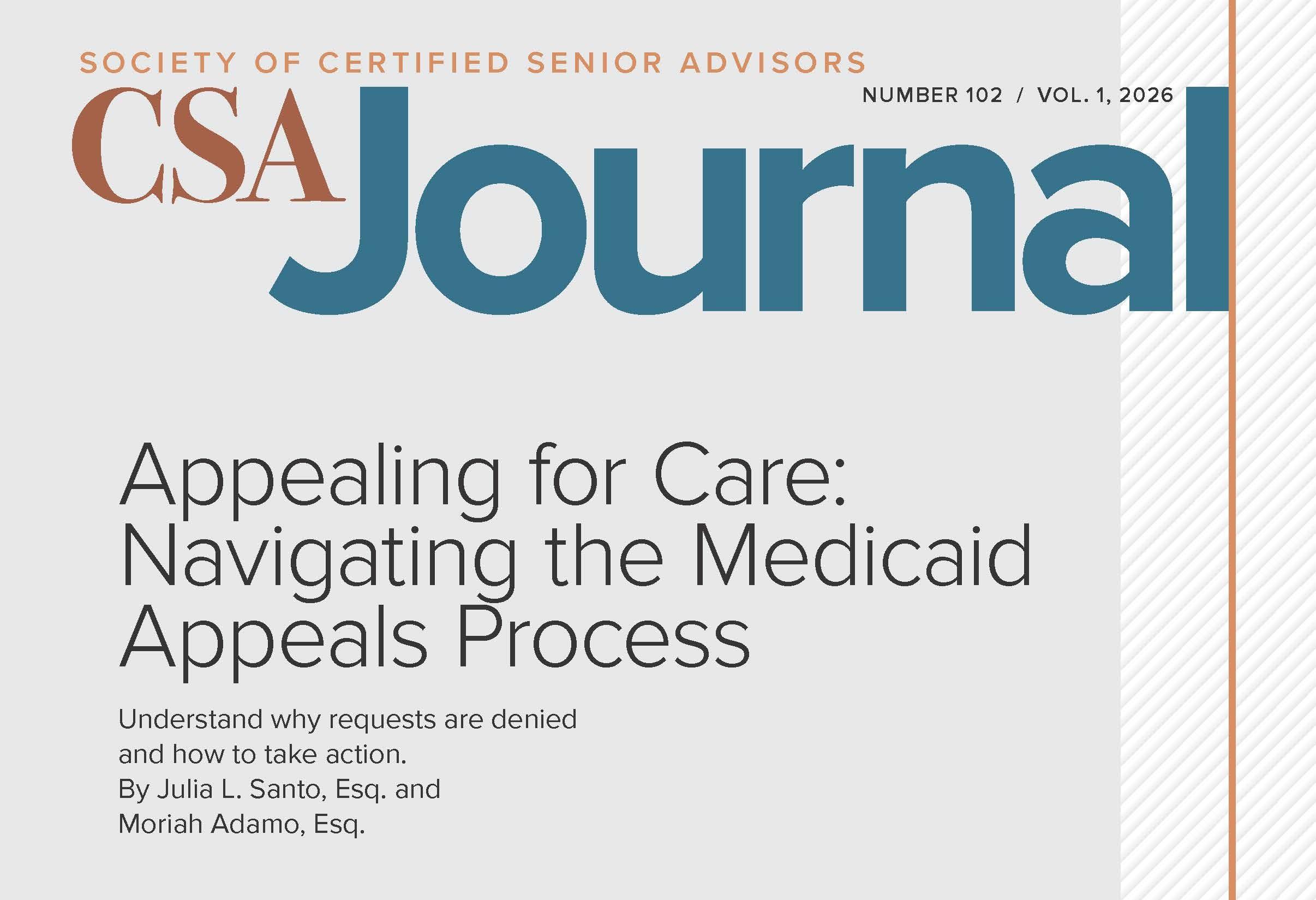
Moriah Adamo and Julia L. Santo have written and lectured about Medicaid denials and appeals, including their article, “Appealing for Care: Navigating the Medicaid Appeals Process.”
Their work reflects a central reality of Medicaid advocacy: a denial or reduction is not merely an administrative inconvenience. When a person living with dementia, blindness, impaired mobility or another serious condition loses essential home-care services, the decision can jeopardize health, independence and safety.
Our team works to translate medical, functional and financial evidence into a clear legal record supporting the care or coverage the client needs.
Related Resources
Frequently Asked Questions
What is Medicaid planning?
Medicaid planning involves legally organizing finances and assets to prepare for the cost of long-term care while meeting Medicaid’s eligibility requirements. Because eligibility rules are complex and timing can significantly affect available options, early planning is generally beneficial.
Why was my Medicaid application denied?
An application may be denied because of income, resources, transfers, missing documentation, residency questions, trust interests or other eligibility issues. The notice should identify the stated reason. An attorney can review whether the determination is accurate and what corrective or appellate options may be available.
What should I do after receiving a Medicaid denial or reduction notice?
Read the entire notice immediately, including the effective date, appeal instructions and deadlines. Preserve the envelope and all accompanying pages. Promptly gather relevant records and obtain advice before the deadline passes.
Can Medicaid reduce previously approved home-care hours?
Medicaid or a managed care plan may reassess services, but a reduction must comply with applicable substantive and procedural requirements. The recipient generally has appeal rights and may be eligible to request aid continuing while the dispute is pending.
What is the difference between a plan appeal and a fair hearing?
A plan appeal asks a Medicaid managed care organization to reconsider its determination. A fair hearing is a state administrative proceeding. In many managed care cases, the plan-appeal process must be completed before a fair hearing is requested, subject to exceptions and the instructions in the notice.
What is aid continuing?
Aid continuing allows qualifying Medicaid recipients to maintain previously authorized services while a timely appeal is pending. Eligibility and deadlines depend on the determination and notice, so the request should be made promptly.
What evidence helps challenge a reduction in home-care services?
Useful evidence may include assessments, medical records, discharge summaries, physician statements, medication lists, prior authorizations and testimony describing the assistance and supervision required throughout the day and night.
Can a Medicaid fair-hearing decision be challenged in court?
In appropriate circumstances, a final administrative determination may be reviewed through an Article 78 proceeding. Strict deadlines apply, and the viability of judicial review depends on the record and legal issues presented.
Speak With a New York Medicaid Attorney
If your family is preparing a Medicaid application, responding to an eligibility problem or challenging a denial or reduction in care, prompt legal guidance can protect important rights and preserve available options.
Contact Abrams Fensterman’s Elder Law, Estate Planning & Administration Department:
Featured Medicaid Planning Resources
Explore practical Medicaid planning resources designed to help New York families understand eligibility, protect assets and prepare for long-term-care needs.