

 |
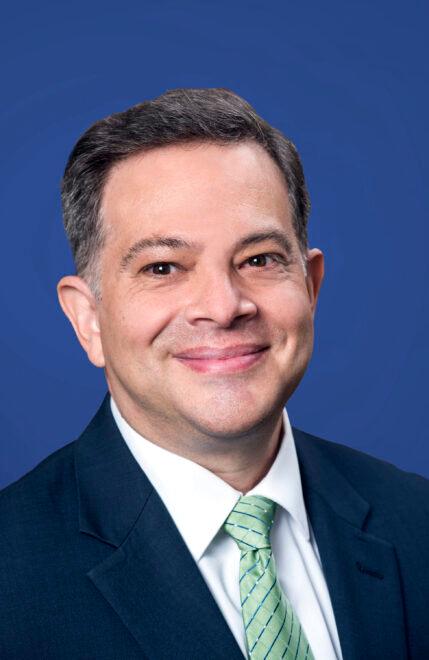
Published August 24, 2026 Author: Nancy Levitin. Partner and the Director of the Health Care Reimbursement and Recovery Practice at Abrams Fensterman, LLP. 516-328-2300 |
Health Care Collection and Reimbursement Recovery Attorneys in New York
What Is Health Care Collection and Reimbursement Recovery?
Health care collection and reimbursement recovery is the legal process providers use to convert unpaid patient accounts into payment. In New York, that work combines Medicaid eligibility intervention, guardianship petitions, estate claims, and collection litigation. At Abrams Fensterman, we recover receivables for hospitals, nursing homes, and physician practices when internal billing efforts stall.
When Providers Bring Us In
By the time a provider calls us, the account has usually already failed one or more internal collection cycles. The resident was admitted without a completed Medicaid application. The responsible party stopped returning calls. The patient died and the family went quiet. The insurer that should have covered the stay was never identified.
What these accounts have in common is that they are no longer billing problems. They are legal problems, and each one has a different remedy. Our job is to identify which pathway will actually produce payment on a given account, and then pursue it. We have successfully collected millions of dollars on behalf of our clients.*
Who We Represent
We represent skilled nursing facilities, assisted living providers, hospitals, home care agencies, physician practices, and other licensed providers throughout New York. Our clients range from single-site facilities carrying a handful of large aged balances to multi-facility operators managing receivables across several counties.
Our work in this area sits inside the firm’s broader health law practice, which means a collection matter that turns into a regulatory or licensing issue does not require a new firm.
Four Ways We Pursue Payment
Before we pursue anyone personally, we look for coverage that already exists. Many accounts written off as bad debt are actually accounts where a payment source was never identified.
Third party coverage. We identify and pursue all available sources of third party coverage, including Medicare, Medicaid, commercial insurance, long term care insurance, and liability coverage where another party caused the injury that generated the bill.
Public benefit eligibility. Where a resident is eligible for Medicaid but has not applied, or applied and was denied for a curable reason, securing that coverage pays the account and stabilizes the resident’s placement at the same time.
The patient’s own assets. Where a resident has funds but cannot access or direct them, we use the appropriate court process to reach those funds lawfully.
Direct legal action. Where coverage does not exist and assets are being withheld or diverted, we bring collection actions against the patient, the estate, or a responsible party who assumed a legal obligation.
Medicaid Eligibility Intervention
A large share of long term care receivables trace back to a Medicaid application that was never filed, filed incompletely, or denied over a documentation gap that could have been closed.
We intervene directly with family members and agents under power of attorney to obtain the records the application requires, and we negotiate and litigate coverage disputes with the government’s attorneys when a denial is wrong on the law or the facts. A resident who has applied for Medicaid and is awaiting a determination is in a different position from a resident who simply has not paid, and the strategy for each is different from the outset.
Guardianship as a Payment Pathway
When a resident lacks capacity, and no agent is acting, or an agent is refusing to apply the resident’s income to the cost of care, a guardianship petition may be the only way to reach funds that are legally available for the resident’s care.
We use this route where it fits the account. For the full picture of how our attorneys handle appointment and administration, see our guardianship practice.
What Happens When a Patient Dies Owing a Balance?
A provider’s claim does not disappear when the patient dies, but the deadline to protect it is short and it does not start on the date of death.
Surrogate’s Court Procedure Act sections 1802 and 1803 govern how a provider presents a claim against a decedent’s estate. Under section 1802, if a claim is not presented within seven months from the date letters were first issued to a fiduciary, the fiduciary is not chargeable for assets paid out in good faith before the claim was presented. The seven-month clock starts when letters issue, not at death, so a delayed probate filing can quietly extend the window while an unaware creditor assumes it has closed.
A claim presented late is not automatically void, but the provider may be left pursuing the distributees rather than the estate, which is slower and less certain. Where a properly presented claim is rejected or ignored, section 1809 allows a petition asking the Surrogate’s Court to determine the claim’s validity. We monitor Surrogate’s Court filings for accounts where a patient has died, present claims within the protected window, and litigate rejected claims when the amount justifies it.
Collection Actions Against Patients and Responsible Parties
Not every account resolves through coverage or the estate. Where a patient or a responsible party has the ability to pay and is refusing, litigation is appropriate.
The most productive of these cases usually involve a person other than the patient. An agent under a power of attorney who transferred a resident’s funds to themselves, a family member who signed a guarantee of payment in an admission agreement, or a responsible party who accepted the resident’s income and did not remit it to the facility can all face direct liability. New York law limits what a facility may require of a family member at admission, so whether a particular guarantee is enforceable depends on how it was presented and what the signer actually agreed to do. We evaluate that before filing.
What New York Law Changed in 2022
No. Since November 23, 2022, New York law has barred health care providers from garnishing wages or placing a lien on a debtor’s primary residence to satisfy a judgment arising from medical debt. The amendments to CPLR 5201(b) and 5231(b)(iv) apply to hospitals licensed under Article 28 of the Public Health Law and to health care professionals licensed under Title 8 of the Education Law. New York separately restricted the reporting of medical debt to consumer credit agencies in December 2023.
These changes removed two of the collection tools providers relied on most, and they are the reason a modern recovery strategy has to be built around coverage sources, estate claims, and responsible party liability rather than post judgment enforcement against a patient’s paycheck or home. They did not eliminate the underlying claim, and they did not foreclose every remedy.
Long Term Care Receivables and the Billing Issues Behind Them
Nursing home receivables are rarely just late payments. They usually reflect an unresolved operational or regulatory question, and we counsel facilities on the issues that generate them:
Net available monthly income that a resident or family member is collecting but not remitting to the facility. Bed hold periods where the payment obligation during a hospitalization or leave is disputed. Personal needs accounts and the facility’s obligations in handling resident funds. Guarantees of payment signed at admission and what they can lawfully require. Involuntary discharge for nonpayment, where notice requirements apply and a pending Medicaid application changes the analysis substantially.
Handling these correctly at the front end prevents receivables. Handling them correctly after the fact determines whether the balance is recoverable. For regulatory representation of long term care facilities beyond the revenue cycle, see our nursing homes practice.
Related Health Law Matters
Collection work sits next to two adjacent practices that are handled by different attorneys at our firm.
If the dispute is with a contracted payor over rates, network terms, or claim denials arising from the contract, that work belongs to our managed care and payor relations attorneys.
If a carrier or government program is demanding repayment of money you have already received, that is audit defense, handled by our insurance and OMIG audit defense team.
Why Providers Choose Our Reimbursement Recovery Practice
Our reimbursement recovery practice is led by Nancy Levitin, Partner and Director of the Health Care Reimbursement and Recovery Practice, whose work spans Medicaid, guardianships, third party reimbursement, private collections, Medicare, HMOs, and estate recoveries.
That combination matters, because a single aged account often requires two or three of those remedies in sequence. We evaluate each account on its own facts, tell you which ones are worth pursuing and which are not, and pursue the ones that are.
We serve providers from five New York offices, in Lake Success, Brooklyn, White Plains, Rochester, and Albany.
Frequently Asked Questions
When should we refer an account to a collections attorney?
Refer when the account stops responding to billing and starts requiring a legal decision. Common triggers are a resident with no Medicaid application on file, a death with no known estate representative, an agent under a power of attorney who has stopped cooperating, or a balance large enough that the seven month Surrogate’s Court window matters.
Can a nursing home sue a family member for an unpaid bill?
Sometimes. A family member is not automatically liable simply for being a relative or for signing admission paperwork. Liability generally requires something more, such as a valid guarantee of payment, or the misuse of the resident’s own funds by an agent under a power of attorney. We assess which theory applies before any action is filed.
How long do we have to file a claim against a deceased patient’s estate in New York?
Under SCPA 1802, a claim should be presented within seven months of the date letters were first issued to a fiduciary. After that, the fiduciary is not chargeable for assets already distributed in good faith, and the provider may be limited to pursuing the distributees.
Can a provider garnish wages for medical debt in New York?
No. Since November 23, 2022, New York law prohibits wage garnishment and primary residence liens to satisfy medical debt judgments brought by hospitals and licensed health care professionals.
What if the resident is eligible for Medicaid but never applied?
That is one of the most recoverable categories of account. We work directly with family members and agents to assemble the application, and we litigate denials where the denial is legally or factually wrong.
Do you handle disputes with insurers and managed care plans?
Our firm does, through a separate practice group. Contract and payor relationship disputes are handled by our managed care attorneys, and repayment demands from audits are handled by our audit defense team.
Contact Our Law Firm
For further information about our health care collection and reimbursement recovery services, please contact our law firm on Long Island at 516-328-2300, in Brooklyn at 718-215-5300, in White Plains at 914-607-7010, in Rochester at 585-218-9999, or in Albany at 518-535-9477 to schedule an initial consultation.
*Prior results do not guarantee a similar outcome.
Required Notices
Please note that Abrams Fensterman, LLP does not offer any language access services.
A translation and description of commonly used debt collection terms is available in multiple languages on the New York City Department of Consumer Affairs website, www.nyc.gov/dca.
WE ARE REQUIRED, UNDER FEDERAL LAW, TO ADVISE YOU THAT WE ARE DEBT COLLECTORS AND ANY INFORMATION WE OBTAIN WILL BE USED IN ATTEMPTING TO COLLECT THIS DEBT.
NYC DCA License No.: 2101359-DCA